Background music: https://www.youtube.com/watch?v=2HNYr0ALbm8
Make a resolution in 2015 to head outside and check out some of the amazing celestial events that will be happening in the night sky. Whether you’re an experienced astronomer or just taking a look at the night sky for the first time, you’ll want to check out these events. Nearly all of these events can be seen with the naked eye, but can be better enjoyed with a telescope or a decent set of binoculars.
Unless otherwise noted, these events can be best seen from mid-latitudes in the Northern Hemisphere.
January
3-4 — Quadrantids Meteor Shower — The first meteor shower of the year will be visible from January 1-5, but will peak overnight on the 3rd and into the early hours of the 4th. This shower typically produces about 40 sightings per hour, but the full moon on the 5th will wash out all except for the brightest meteors. These meteors are leftover pieces of comet 2003 EH1, and will appear to be originating from the constellation Bootes, though they may be visible throughout the sky.
February
6 — Jupiter at Opposition — This is the best day of the year to view Jupiter, as it makes it's closest approach to Earth and will be fully reflecting light from the sun. A good pair of binoculars or a telescope will be able to see Jupiter’s four largest moons: Io, Europa, Ganymede, and Callisto. This will be visible in the Northern and Southern hemispheres.
22 — Conjuncture of Venus and Mars — Just after sunset, Venus and Mars will appear only half of a degree apart in the western sky.
March
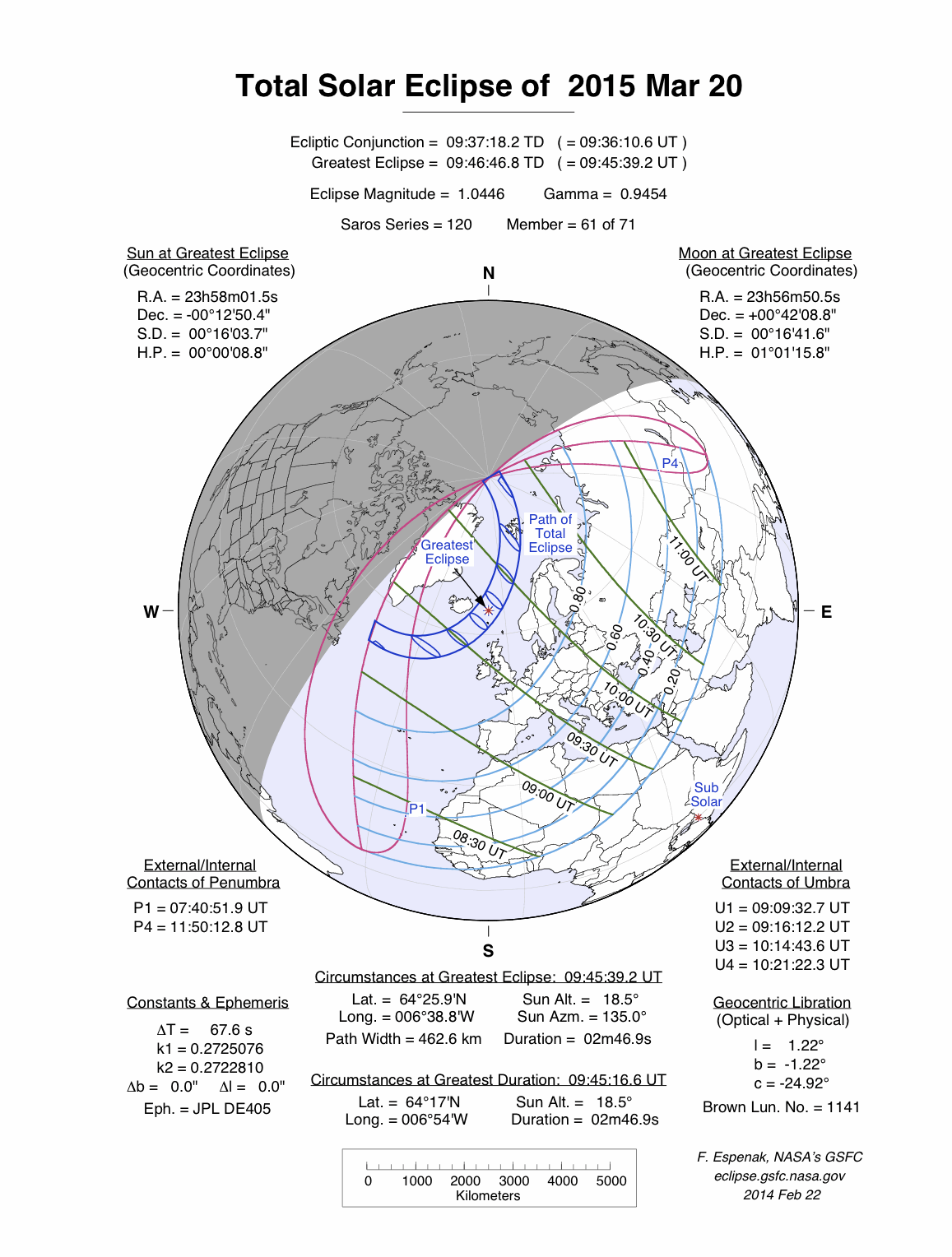
20 — Total Solar Eclipse — The sun’s corona will be visible around the moon when the total solar eclipse peaks on the morning of March 20th. The best view of the event will be from the Atlantic Ocean near Greenland, and into the northern parts of Siberia. However, those living in Europe, Northern Africa, and Western Asia will be able to partially view the eclipse.
April
4 — Total Lunar Eclipse — This is the third event of the Total Lunar Eclipse tetrad, which began in April 2015. The moon will spend nearly nine and a half hours in the penumbral or umbral phase, with just under five minutes as a total eclipse. The best view of the eclipse will be in Australia, though it can also be viewed from anywhere in North America, most of South America, most of Asia, and bits of Africa.
22-23 — Lyrids Meteor Shower — The remnants of Comet C/1861 G1 Thatcher will be visible between the 16th and 25th, with the Lyrids peaking overnight on the 22nd with up to 20 meteors per hour. The best time to view the meteor shower will be after midnight, just after the first quarter moon sets. These meteors have the potential to be very dusty with bright tails that seem to hang in the air. The meteors will appear to be coming from the constellation Lyra.
May
5-6 — Eta Aquarids Meteor Shower — This shower is composed of dusty remnants of the famed Halley’s Comet. The long-running shower is visible from April 19th until May 28th, but will peak overnight on May 5th with up to 30 sightings per hour. Unfortunately, the full moon from the 4th will wash out all but the brightest meteors. The meteors will appear to be coming from the constellation Aquarius. The Eta Aquarids can be seen in the Northern and Southern Hemispheres, though those in the South will have a better view.
23 — Saturn at Opposition — This will be the best night of the year to view Saturn, as it makes its closest approach and will be reflecting plenty of sunlight. A medium telescope (about 5-8 inches; 13-20 centimeteres) is required to see Saturn’s rings and some of its largest and brightest moons.
July
28-29 — Delta Aquarids Meteor Shower — This meteor shower is the remnant of two different comets, Marsden and Kracht. The shower runs from July 12th through August 23rd. It will peak overnight on July 28th and into the morning of the 29th. Normally, there could be as many as 20 sightings per hour, but the light from the full moon on the 31st will wash out all but the brightest meteors. The meteors will appear to be coming from the constellation Aquarius.
August
12-13 — Perseids Meteor Shower — These meteors are leftovers from the Swift-Tuttle comet and are a favorite among many skywatchers. The shower can be visible from July 17th through August 24th, and will peak overnight on August 12th at 60 sightings per hour. This year is expected to be an amazing show, as the new moon on the 14th will make for nice, dark skies. The meteors will appear to be coming from the constellation Perseus.
September
1 — Neptune at Opposition — This will be the best day of the year to view Neptune, as it makes its closest approach. While more experienced astronomers with large, high-powered telescopes may be able to see some details of the eighth planet, it will appear only as a blue speck to those using smaller equipment.
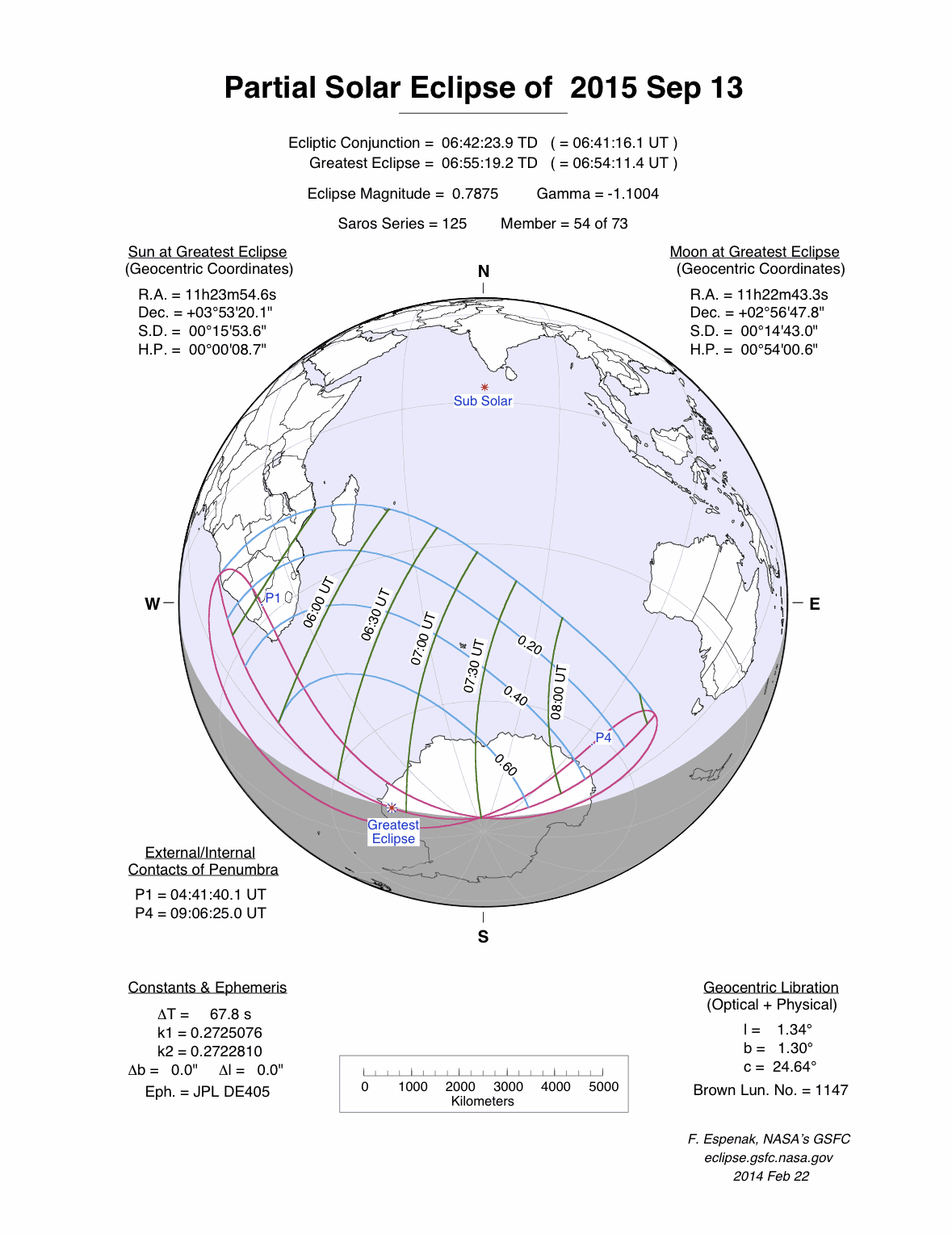
13 — Partial Solar Eclipse — This crescent-shaped partial solar eclipse will be peak over Antarctica, though it will be visible to those living in southern African countries as well. Remember: Do not look at the sun directly without appropriate eye protection.
28 — Total Lunar Eclipse — The 2014/2015 Total Lunar Eclipse tetrad will conclude on this night. The total eclipse will last for over an hour and will be visible to those living in North America, South America, Europe, Africa, and some portions of Asia. The eclipse will not be visible from Australia.
October
8-9 — Draconids Meteor Shower — Produced by the dusty remnants of comet 21P Giacobini-Zinner, the Draconids will span from October 6-10 and peak overnight on the 8th. This is a small shower, with about 10 sightings per hour. The second quarter moon will wash out many of the meteors, though the brightest may still be visible. The meteors will appear as if they are originating from the constellation Draco.
11 — Uranus at Opposition — This will be the best night of the year to view Uranus, as it makes its closest approach. Only those with large, high-powered telescopes may be able to see some details of this amazing planet. Individuals using smaller equipment will only be able to see it as a small teal dot.
21-22 — Orionids Meteor Shower — Like the Eta Aquarids, this shower is also made up of remnants from the famed Halley’s Comet. The shower spans from October 2nd through November 7th, and it will peak overnight on the 22nd with up to 20 sightings per hour. The first quarter moon will set by midnight, creating more favorable conditions for viewing the shower. The meteors will appear to be originating from the constellation Orion.
26 — Conjuncture of Venus and Jupiter — Venus and Jupiter are two of the brightest planets in the sky and will be one degree away from each other on this night. They will be best viewed before sunrise, looking into the eastern sky.
28 — Conjuncture of Venus, Mars, and Jupiter — Building off of the event with Venus and Jupiter two nights before, Mars will join and create a triangle with the other planets, seen just one degree apart. The best time to view this will be just before sunrise, looking into the eastern sky.
November
5-6 — Taurids Meteor Shower — The Taurids is a small shower produced by dust from Asteroid 2004 TG10. It has an extremely long span from September 7th through December 10th. It will peak overnight on the 5th with about 5-10 sightings per hour. The meteors will also be competing with light from the second quarter moon, which will likely wash out all but the brightest meteors. The meteors will appear to originate from the constellation Taurus.
17-18 — Leonids Meteor Shower — The Leonids are created by remnants of comet Tempel-Tuttle. The shower ranges from November 6th through the 30th, though it will peak overnight on the 17th and into the early hours of the 18th with about 15 sightings per hour. The best time to view it is after midnight, once the first quarter moon has set. In 2001, the Leonids produced hundreds of sightings per hour, but we aren’t expected to see that kind of show again until 2034. The shower will appear to originate from the constellation Leo.
December
7 — Conjuncture of the Moon and Venus — Our moon and Venus will appear to be only two degrees away from one another in the early morning hours of the 7th. For the best viewing, look at the eastern sky right before sunrise.
13-14 — Geminids Meteor Shower — The Geminids is produced from the remnants of a small asteroid named 3200 Phaethon, and is a perennial favorite among skywatchers. The shower spans from December 7th through the 17th, but will peak overnight on the 13th and into the early hours of the 14th with up to 120 sightings per hour. The meteors will appear multicolored, which gives an added bonus to the already spectacular show. The best time to view it will be after midnight, when the moon has set and conditions are darker. These meteors will appear to originate from the constellation Gemini.
22-23 — Ursids Meteor Shower — The final meteor shower of the year is caused by remnants of the comet Tuttle. The event will span from the 17th through the 25th, peak overnight on the 22nd and into the early hours of the 23rd with about 10 sightings per hour. Unfortunately, the full moon on the 25th will wash out all but the brightest of these meteors. The shower will appear to originate from the constellation Ursa Minor.
Enjoy.
-Saleem